Christ the Redeemer: Curating a Nation in Open Arms
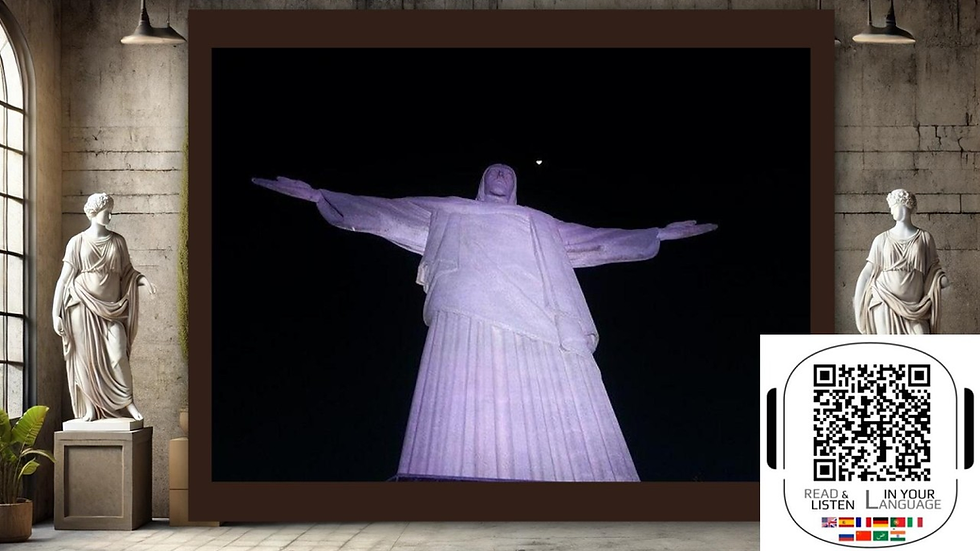
Perched atop Mount Corcovado, arms outstretched in a silent gesture of embrace, the Christ the Redeemer statue doesn’t just overlook the city of Rio, it watches the world. At 98 feet tall, not counting its 26-foot pedestal, it is not the largest statue of Christ. But it is perhaps the most recognized, a form that has transcended its religious roots to become a symbol of Brazil itself, and of the universal longing for grace at scale.
But for museum professionals, architects, and curators, this concrete colossus prompts deeper inquiry: Can a single sculpture curate a national identity? What does it mean when a monument becomes a mirror of collective hope?
A Statue of Devotion and Design
Completed in 1931 after nine years of construction, the statue was:
Designed by Brazilian engineer Heitor da Silva Costa
Sculpted by French artist Paul Landowski
Built with a skeleton of reinforced concrete and clad in soapstone tiles, chosen for their durability and soft texture
From its Art Deco elegance to its engineering resilience, Christ the Redeemer was never meant to dominate. It was meant to welcome.
The artistic decisions matter:
It’s not aggressive. It’s non-confrontational.
It doesn’t point. It receives.
It’s not confined to the church, but placed in the skyline of daily life.
Curators can learn from this:
Symbolism is more powerful when it invites participation.
Monumentality doesn’t require muscle, it can be merciful.
Site specificity isn’t just topography. It’s emotional geography.
From Sacred to Symbolic
Originally commissioned as a religious project to reaffirm Catholicism in Brazil, the statue has since evolved:
It is featured on postcards, Olympic broadcasts, football celebrations, fashion shoots.
It has appeared in protests, projections, and global campaigns.
It is sometimes a religious icon, sometimes a pop culture avatar, and often, both.
This transformation is curatorial in nature:
The object is fixed, but its meaning is mobile.
Audiences shape context. The artwork absorbs it.
Sacred monuments can become secular icons without losing their aura.
Museums must ask:
Can we embrace multiplicity of meaning as a virtue?
How do we allow objects to evolve with society, without losing historical roots?
Can cultural institutions embrace faith-based heritage without excluding secular engagement?
Christ the Redeemer didn’t lose its purpose. It expanded it.
The View from Above and Within
Visitors who ascend Corcovado's steep incline are met with two awe-inspiring phenomena:
The panoramic view of Rio, a city of beaches, favelas, forests, and skyscrapers.
The colossal proximity of the statue; both human and divine in scale.
This dual encounter turns the statue into both frame and lens.
Curatorial insight:
Scale isn't just size. It’s perspective manipulation.
Elevation can change perception, not just location.
Sacred sites often offer new ways of seeing the world below, literally and metaphorically.
To stand beneath Christ’s arms is to see both the heavens and our place on Earth differently.
Restoration as Ritual
The statue has weathered time, lightning strikes, storms, and more. Its soapstone skin is delicate, requiring near-constant restoration including sourcing stone from the original quarry to match its texture and tone. Each restoration is not just conservation. It’s reverence.
Museums should observe:
Material integrity is cultural integrity.
Conservation isn't maintenance, it’s ongoing storytelling.
Restoration work can be made visible and honored, a public ritual, not a backstage task.
Preserving Christ the Redeemer is more than upkeep. It’s an act of national continuity.
The Monument That Embraces Back
Christ the Redeemer does not turn his back to anything, not to poverty. Not to chaos. Not to beauty. Not to doubt. A museum may preserve memory. But this statue curates mercy, in 360 degrees. As we rethink public monuments in a time of cultural reckoning,


Commenti