Museums as Makerspaces: Fostering Creativity and Innovation
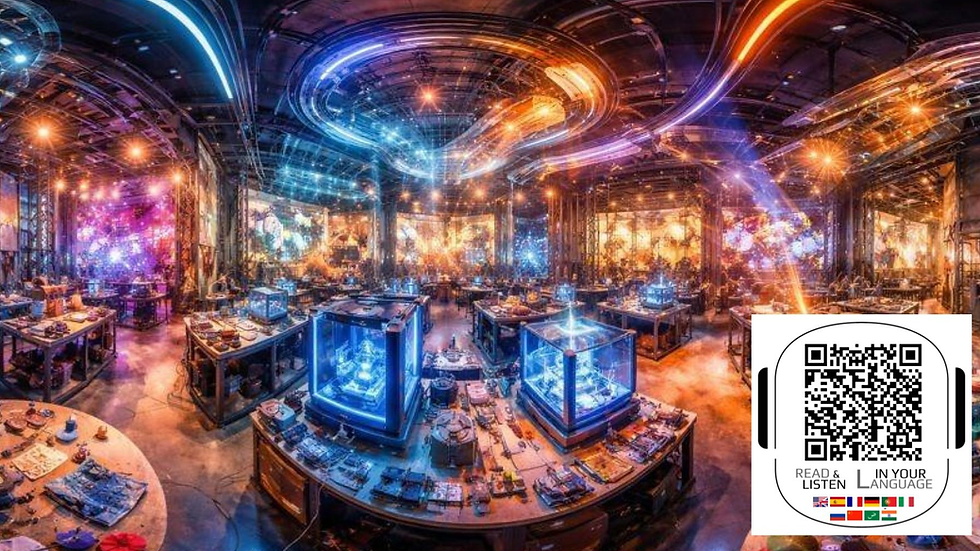
Museums have long been places of observation, spaces where visitors encounter finished objects, completed masterpieces, and resolved histories. But a growing number of institutions are flipping that model on its head. By embracing makerspaces, museums are transforming from places that show creativity into places that actively generate it. In these environments, visitors are no longer passive audiences. They become makers, experimenters, and collaborators, participants in the living process of culture itself.
From Display to Doing
Makerspaces introduce tools, materials, and technologies directly into the museum experience: 3D printers alongside ancient artifacts, laser cutters near design exhibitions, textile labs embedded within fashion galleries. The message is clear, innovation is not separate from heritage; it grows out of it. By inviting visitors to build, prototype, and tinker, museums collapse the distance between past and present. Historical craftsmanship becomes a starting point for contemporary invention.
Learning Through Making
Hands-on creation changes how people learn. Making encourages problem-solving, experimentation, and resilience, skills that traditional didactic exhibitions often struggle to cultivate. In museum makerspaces, failure is reframed as discovery, and curiosity becomes the curriculum. For young visitors especially, these spaces offer an alternative educational model, one grounded in play, iteration, and self-directed exploration. Museums become informal learning laboratories, complementing schools and universities with experiential knowledge.
Bridging Art, Science, and Technology
One of the greatest strengths of museum makerspaces is their ability to dissolve disciplinary boundaries. A single project might combine engineering, storytelling, visual art, and environmental science. Visitors might code an interactive sculpture inspired by a historical artifact or design sustainable materials informed by traditional techniques. This interdisciplinary approach reflects the realities of contemporary innovation, where creativity thrives at the intersection of fields. Museums are uniquely positioned to model this hybridity.
Community as Co-Creator
Makerspaces also shift the museum’s relationship with its community. Local artists, designers, engineers, and educators often become collaborators rather than guests. Workshops, residencies, and open labs transform museums into civic hubs where knowledge is shared horizontally rather than delivered top-down. In this model, the museum becomes a platform, supporting community creativity while amplifying diverse voices and skills.
Designing for Inclusion
Well-designed makerspaces prioritize accessibility. They welcome different learning styles, abilities, and cultural backgrounds by offering multiple entry points to creativity. Analog tools sit alongside digital technologies; low-tech making coexists with advanced fabrication. By valuing process over polish, museums send a powerful signal: creativity belongs to everyone, not just experts.
Rethinking the Museum’s Role
For directors and curators, makerspaces represent a philosophical shift. The museum is no longer only a place where culture is preserved, it is a place where culture is produced. Knowledge becomes dynamic, participatory, and evolving. This evolution aligns with a broader societal shift toward collaboration, open innovation, and lifelong learning. In embracing makerspaces, museums reaffirm their relevance, not as static institutions, but as living ecosystems of creativity.


Commenti